Close
Ion exchange treatment removes heavy, alkaline and alkaline-earth metal salts, free mineral acids, and alkali and some organic material from sewage. For this purpose sewage is treated with synthetic ion exchange resins (ionites) which molecules contain mobile ions (cations or anions).
The ion exchange method is suitable mostly for sewage with a total salt content within 300 mg/l. Local ion exchange treatment is the most economically efficient.
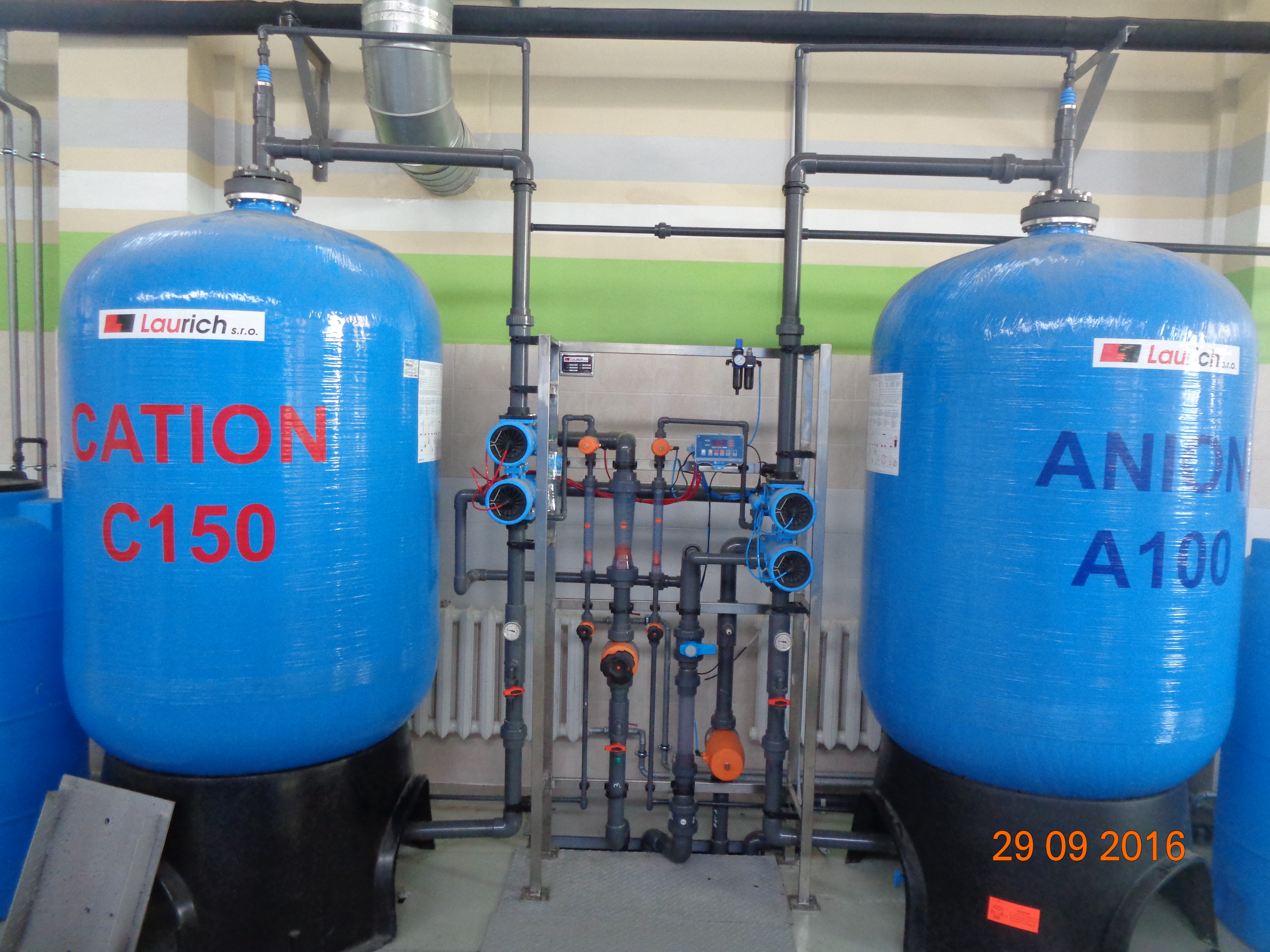
The sewage ion exchange treatment includes sequential cationite and anionite treatment stages.
Saturated ionites are regenerated. Solutions obtained after ionite regeneration (eluates) are sent for further treatment.
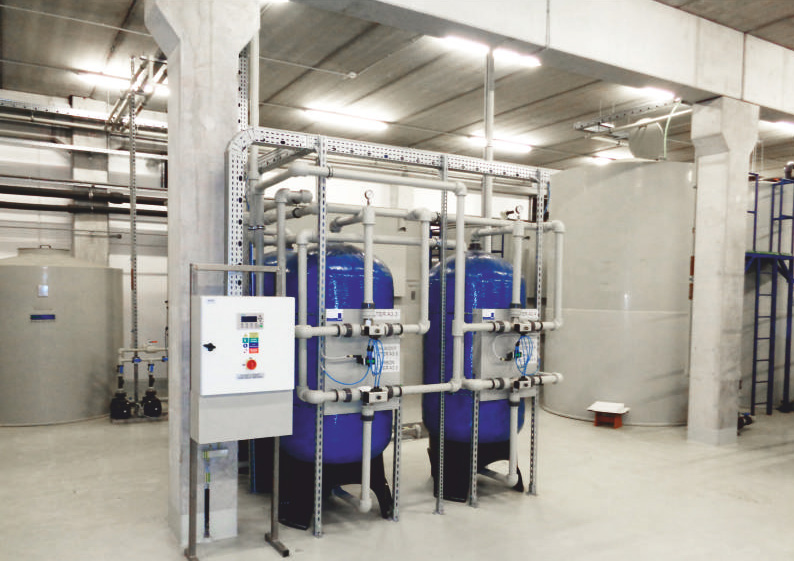
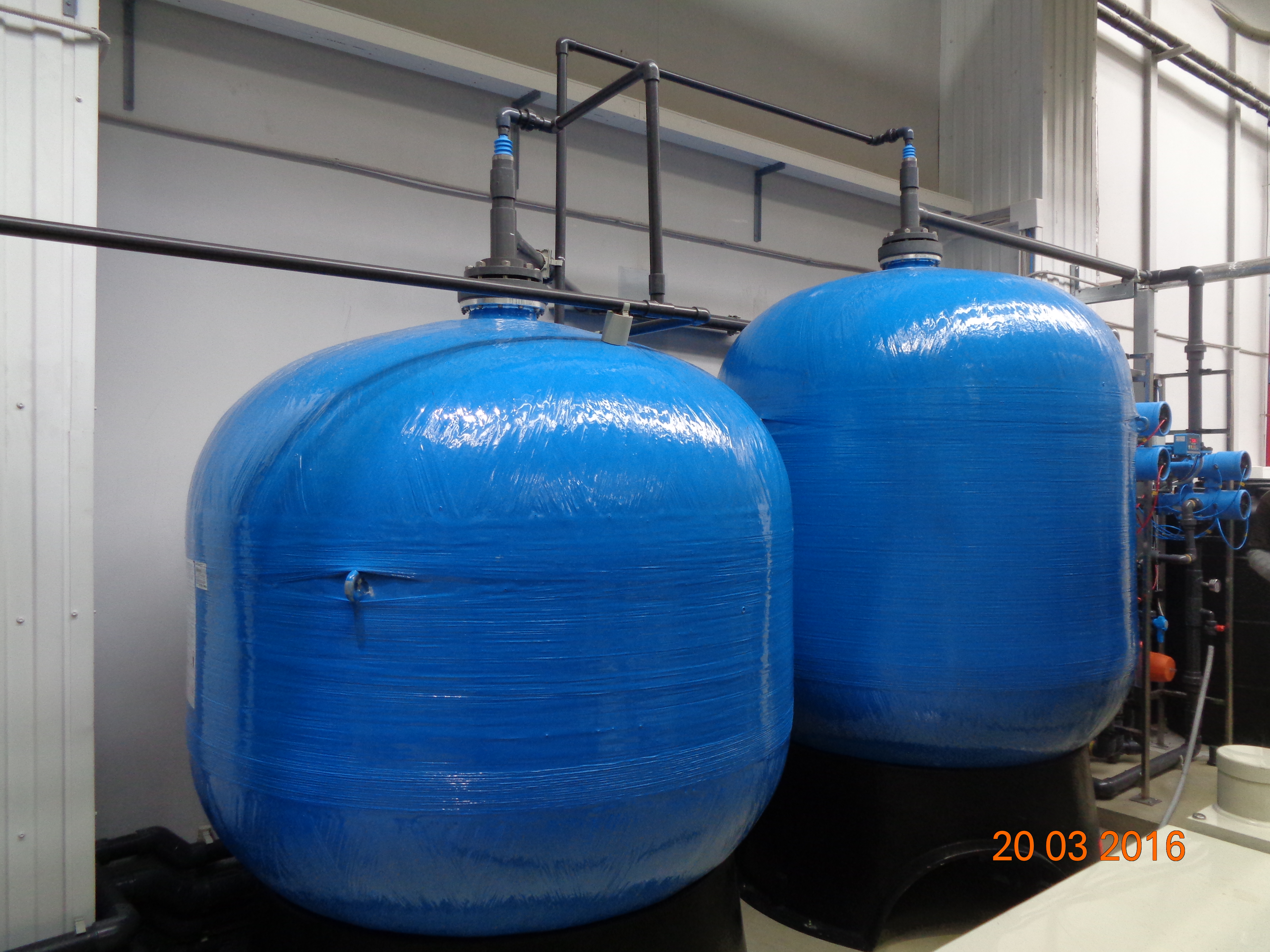
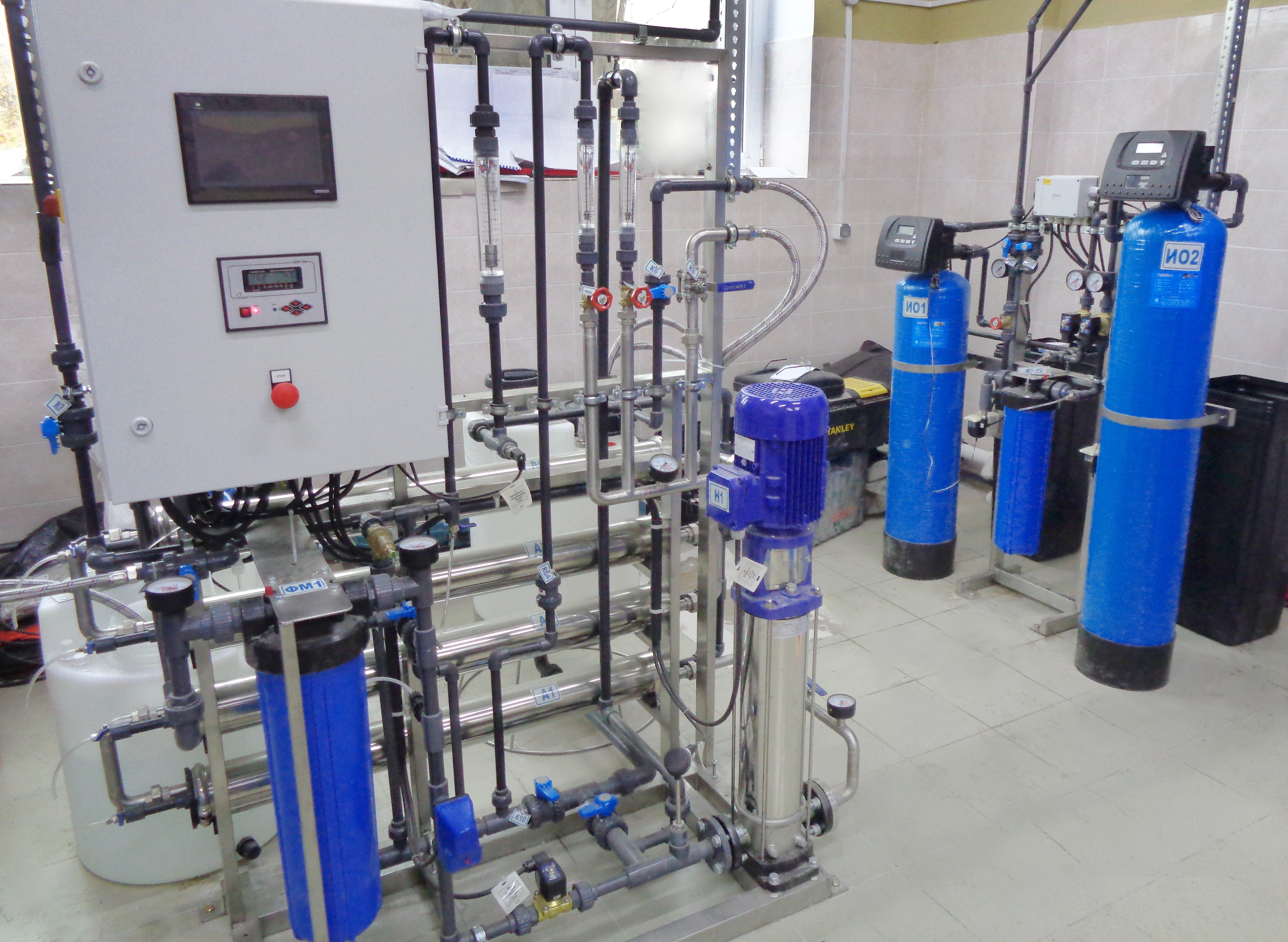
Ion exchange columns are often the main components of treatment systems that may additionally include sand and charcoal filters, expansion tanks, pump stations and other equipment. These systems are equipped with process control systems providing for automatic system operation and regeneration.
Description
Ion exchange treatment removes heavy, alkaline and alkaline-earth metal salts, free mineral acids, and alkali and some organic material from sewage. For this purpose sewage is treated with synthetic ion exchange resins (ionites) which molecules contain mobile ions (cations or anions).
The ion exchange method is suitable mostly for sewage with a total salt content within 300 mg/l. Local ion exchange treatment is the most economically efficient.
The sewage ion exchange treatment includes sequential cationite and anionite treatment stages.
Saturated ionites are regenerated. Solutions obtained after ionite regeneration (eluates) are sent for further treatment.
Ion exchange columns are often the main components of treatment systems that may additionally include sand and charcoal filters, expansion tanks, pump stations and other equipment. These systems are equipped with process control systems providing for automatic system operation and regeneration.